July 10, 2026
Why Field Marketing Teams Are Ditching Spreadsheets for a Single Workspace
By KatchT Team
Ask any field marketer how many tools it takes to run one trade show, and you'll usually get a long pause before the list starts: a spreadsheet for logistics, a shared drive for booth assets, Slack for team coordination, and a CRM export for lead follow-up.
None of those tools were built for events. Each one works fine on its own — the problem shows up in the gaps between them.
The gaps are where events lose money
- Logistics and booth assets live apart, so nobody notices a missing banner until it's too late to reprint.
- Team coordination happens in chat, so decisions about who's covering the booth at 2pm on day two get buried in a thread from three weeks ago.
- Lead follow-up starts late, because leads sit in a badge-scanner export until someone has time to clean and upload them.
Each gap is small. Across a dozen events a year, they add up to missed deadlines, duplicated work, and leads that go cold before anyone reaches out.
What a single workspace changes
When logistics, booth assets, marketing, team coordination, and lead follow-up live in one place, tied to the same event record, three things happen:
- Deadlines become visible before they're missed — not discovered the week of the show.
- Everyone works from the same source of truth, instead of five different versions of "the plan."
- Follow-up starts the same day, because leads land in a system your team is already using, not a separate export waiting to be dealt with.
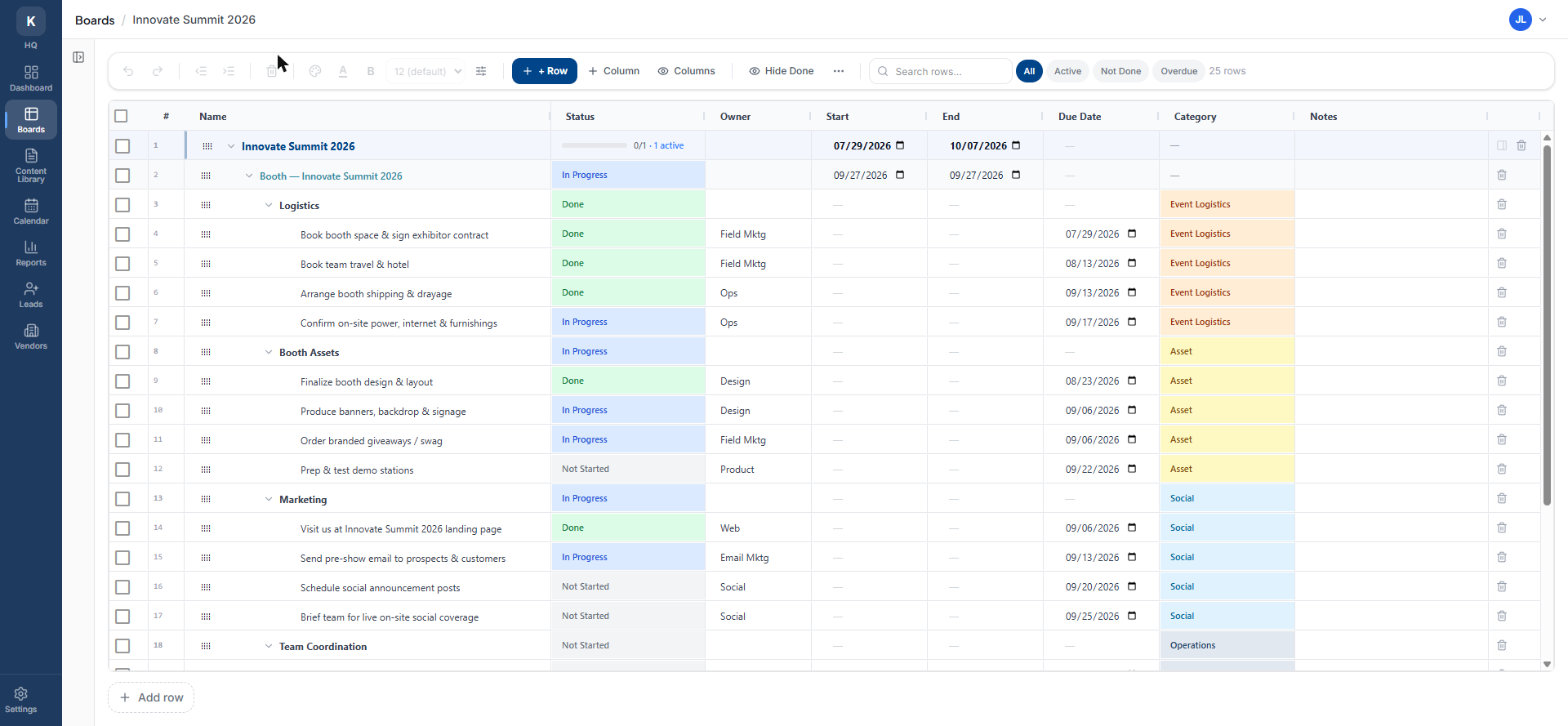
This is the idea behind KatchT's Event Operations Mode: one workspace per event, covering the entire lifecycle from planning through ROI. If you're still running events across five disconnected tools, see how it works.